
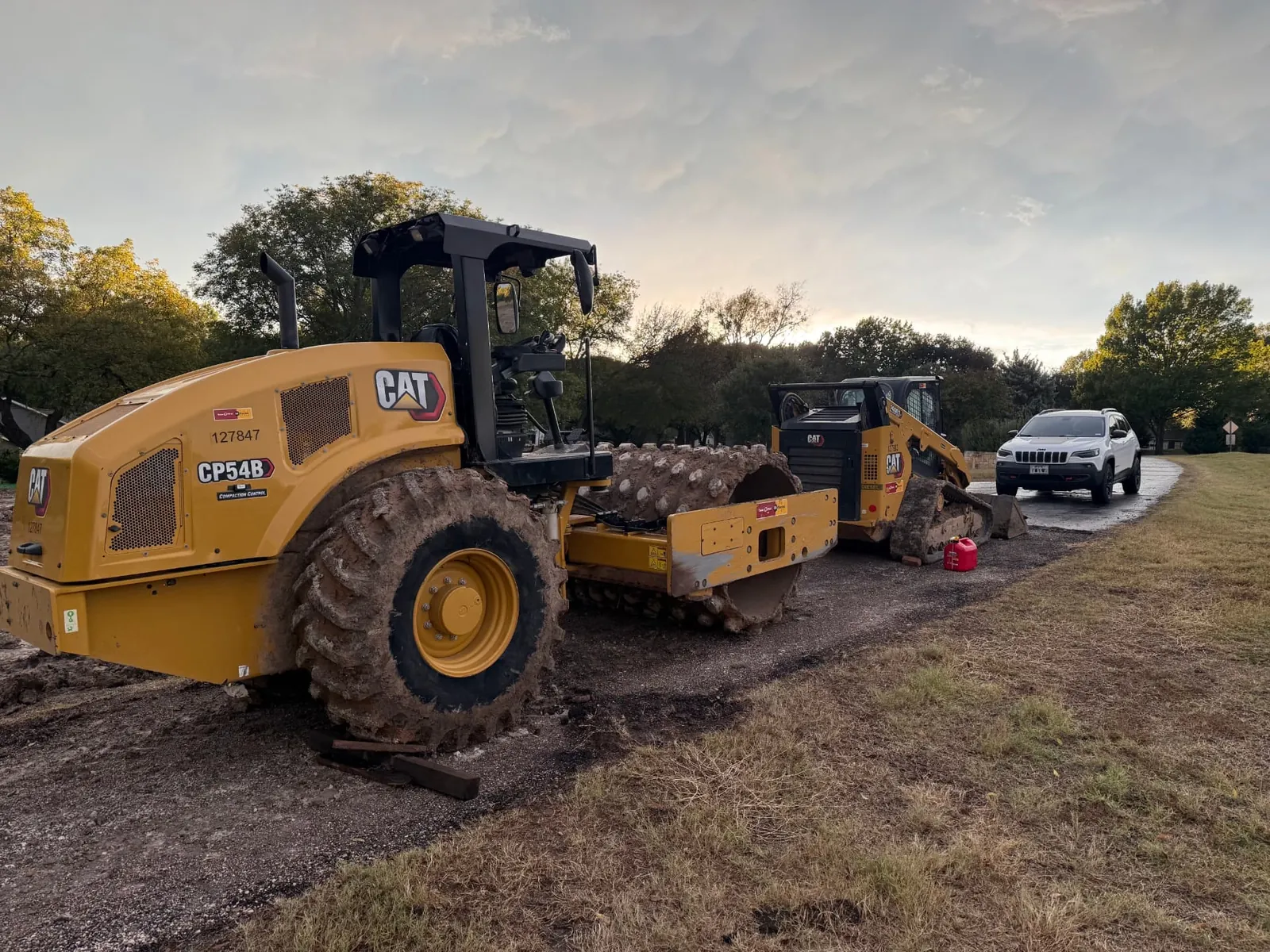
Driveways and rock roads
Asphalt Millings Driveways in McKinney, TX
Asphalt millings driveway installation for McKinney, Anna, Sherman, Argyle and acreage across Collin, Grayson and Denton counties. Recycled asphalt, spread, graded and compacted into a surface that packs harder every summer.
An asphalt millings driveway is built from recycled asphalt, ground up from old roads and parking lots, spread over a prepared base and compacted into a firm, dark surface. Steele Construction LLC installs asphalt millings driveways and repairs existing ones for rural homes and acreage in McKinney and across Collin, Grayson and Denton counties. Millings cost less than new asphalt, pack tighter with heat and traffic, and shed water without the dust and loose rock of gravel. Free estimates, one day response.
Recycled asphalt
What Asphalt Millings Are
When a road or a parking lot gets resurfaced, the old asphalt is ground off by a milling machine. What comes off is asphalt millings: small, angular pieces of aggregate still coated in the original asphalt binder. Recycled asphalt, crushed asphalt and millings are all the same material.
That leftover binder is what makes millings different from gravel. Spread over a base and compacted, the pieces lock together, and on a hot Texas afternoon the binder softens and the surface fuses tighter under the weight of every vehicle that crosses it. A millings driveway is firmest a summer or two after it was built.
The result is a surface that looks close to asphalt, drains like asphalt and does not throw dust or scatter rock, at a cost well below a new hot mix driveway.
Installation
Recycled Asphalt Driveway Installation, Step by Step
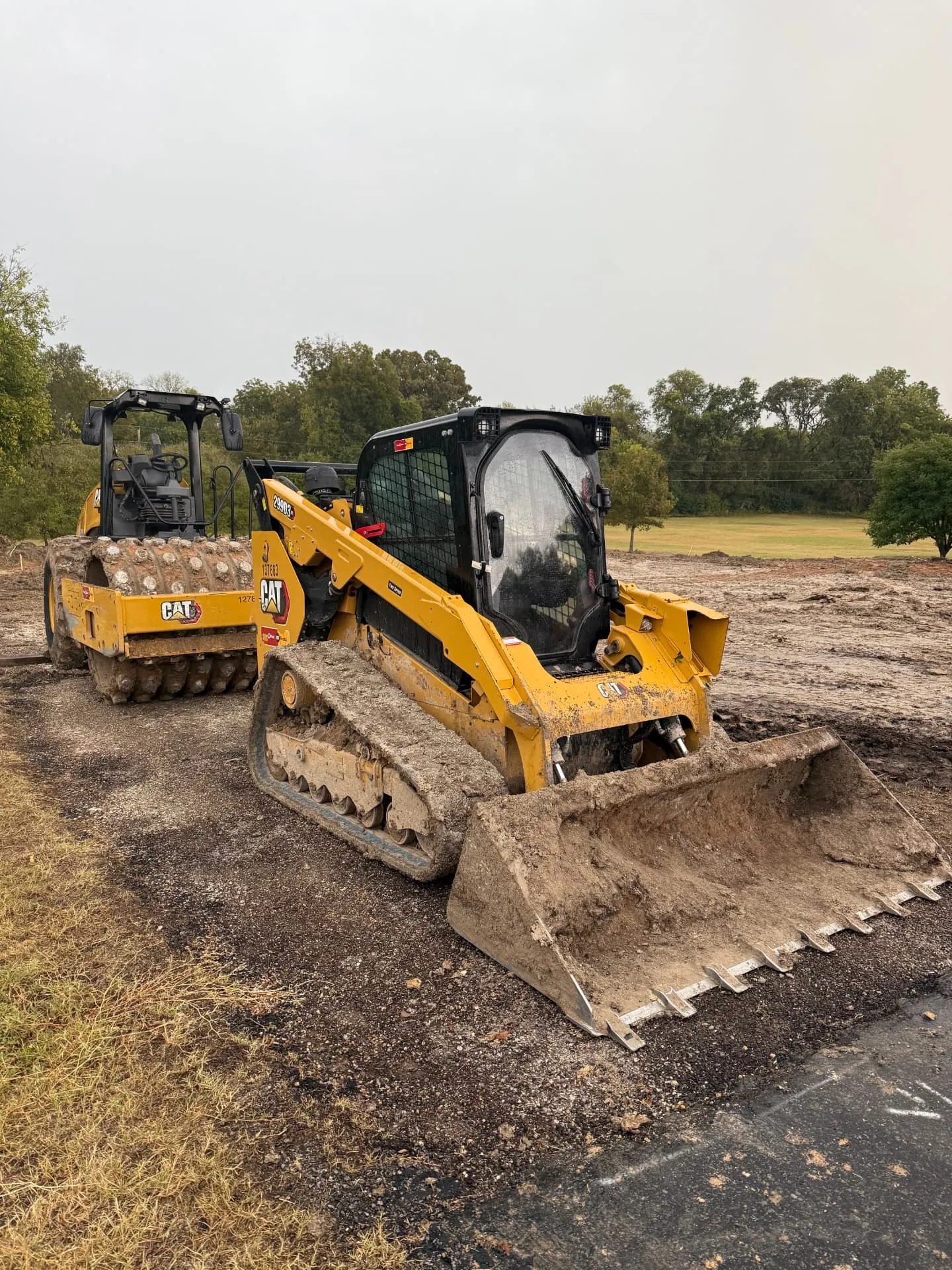
Four steps.
Step 1
Base grading
The driveway is cut to grade and crowned so water runs to the sides. Low spots are built up with fill placed and compacted in lifts. Where the drive crosses a ditch, a culvert goes in first. A millings surface over a soft base sinks into it.
Step 2
Compaction
The base is compacted with a roller so the millings have something solid to lock against. This is the step that decides whether the drive is still flat in five years.
Step 3
Spread and grade
Millings are delivered, spread across the base in an even layer and graded to keep the crown. The layer is thick enough to pack into a solid mat and no thicker.
Step 4
Compaction and cure
The millings are rolled until the surface is tight. From there, sun and traffic finish the job. The binder softens in the heat and the surface fuses harder with every summer.
Compare
Asphalt Millings vs Gravel
Gravel stays loose. It rolls under tires, spreads into the yard, throws dust behind every vehicle and needs regrading as it wears. Millings do the opposite. They lock together and get harder, so the surface stays where it was put, sheds water instead of rutting, and does not migrate into the grass.
The tradeoff is cost and flexibility. Gravel is cheaper to install and easier to change later, which is why a brand new long driveway on acreage in Sherman or Argyle often starts as gravel and gets millings once the base has settled and the route is final. Millings cost more up front and pay it back in maintenance.
For heavy use, millings win. A drive that carries trucks, trailers and equipment to a barn or a shop holds up far better in millings than in gravel, because the surface does not rut under the load.
Existing driveways
Topping or Repairing an Existing Millings Driveway
A millings driveway that was built on a good base lasts a long time, but it is not permanent. Heavy traffic wears the surface thin in the wheel paths, edges break down where vehicles cut the corner, and a drive that lost its crown starts holding water. Most of that is fixed by regrading and adding a new layer of millings over the old one, then compacting it. The old surface becomes part of the base.
If the base has failed, the fix is deeper. A soft spot that keeps rutting no matter how much material goes on it means the base is wet or was never compacted, and it has to be dug out, drained and rebuilt before new millings go down. Adding material on top of a bad base is money spent twice.
We also top gravel driveways with millings. If the gravel drive has a sound base, it is regraded and compacted and the millings go over it, which is the usual upgrade path for a drive that started as gravel.
Questions
Asphalt Millings Questions
Are asphalt millings and recycled asphalt the same thing?
Yes. Millings, recycled asphalt and crushed asphalt all describe ground up asphalt from old roads and parking lots. The pieces still carry the original asphalt binder, which is what makes them lock together when compacted.
How much does an asphalt millings driveway cost?
More than gravel, less than new asphalt. The price depends on the length of the drive, the base work it needs, the depth of millings and delivery. Every driveway is quoted after a site visit, and estimates are free.
Do millings get hard like asphalt?
They get close. Compacted millings form a firm mat, and heat and traffic fuse the binder tighter over the first summer or two. The surface stays slightly more flexible than hot mix asphalt, which suits clay soil that moves with the seasons.
Can you put millings over my gravel driveway?
Yes, if the base is sound. The gravel is regraded and compacted, then millings go over it. Soft spots get dug out and rebuilt first.
How thick should the millings be?
Thick enough to compact into a solid mat over the base. The right depth depends on the base and the traffic, and it is set at the site visit.
Do you do millings roads as well as driveways?
Yes. Private roads, ranch roads and shop and barn access roads are built the same way, with culverts and drainage graded along the run as one job.
Get a Millings Estimate
Send the address, the length of the drive and whether it is new, gravel now, or millings that need topping. We walk it, check the base and put the price in writing. Free estimates.