
Pool removal
Pool Removal and Pool Fill-In in McKinney, TX
Pool removal and inground pool fill-in for McKinney, Plano, Richardson, Frisco and homeowners across Collin and Dallas counties. Demolish, backfill, compact and grade, so the yard is usable again.
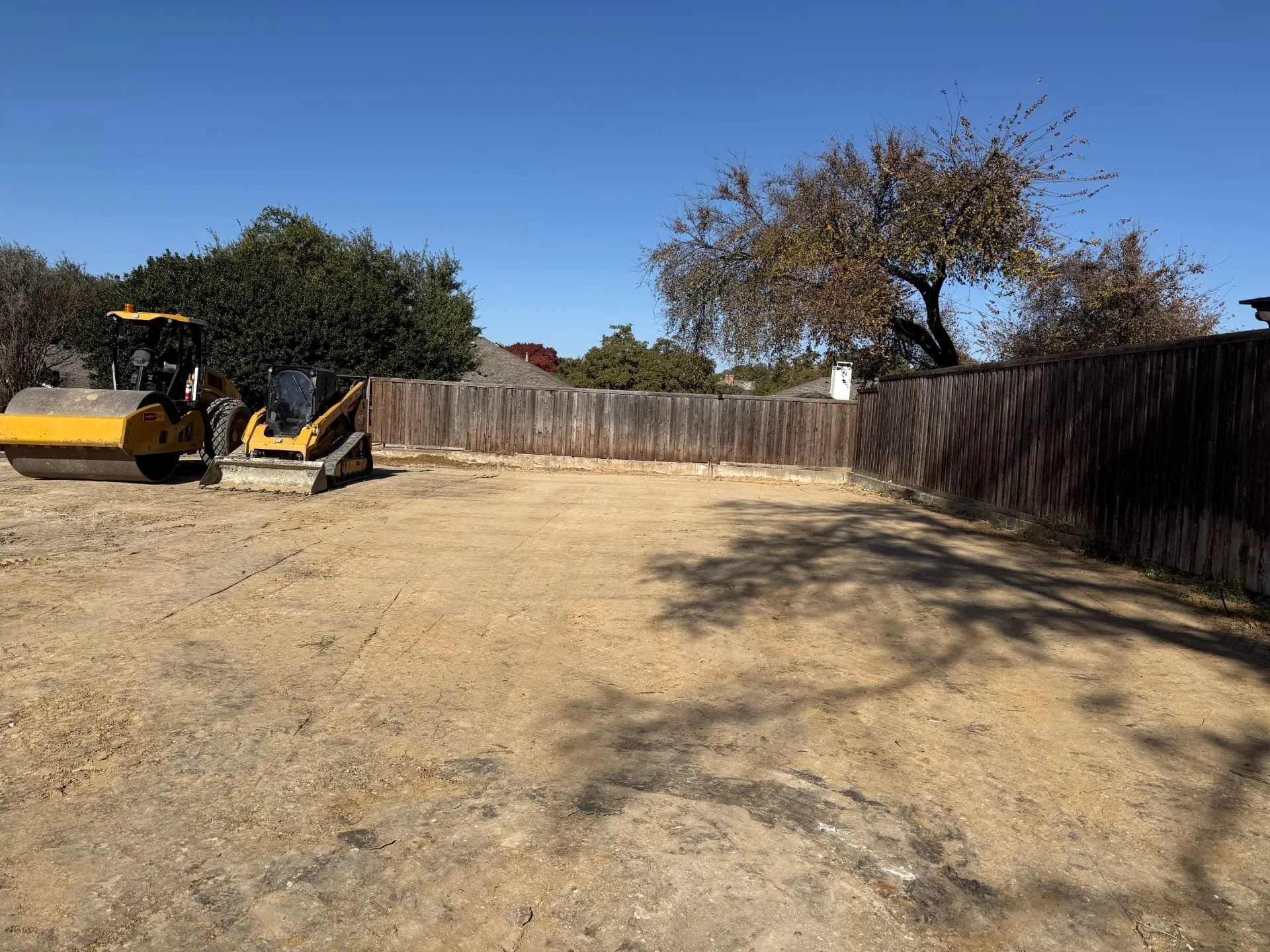
Steele Construction LLC removes inground swimming pools for homeowners in McKinney and across Collin and Dallas counties. The pool is drained and disconnected, the shell is broken up, the cavity is backfilled with select fill placed in lifts and compacted with a roller, and the ground is graded level with the rest of the yard. When it is done, the pool is a solid section of lawn you would not know had been there. Free estimates, one day response.
Two approaches
Partial vs Full Pool Removal
There are two ways to get rid of an inground pool. A partial removal, sometimes called a fill-in, breaks the shell so it can never hold water, leaves the lower portion of the concrete in the ground, and backfills over it. A full removal breaks out and hauls away the entire shell, the deck and the plumbing, then backfills the empty hole.
Partial removal is the common choice. It costs less, takes less time and, done right, leaves a yard that is solid enough for lawn, a patio or a shed. The shell is broken through the floor and the walls are knocked down below grade so the fill has somewhere to drain and the concrete cannot trap water. Full removal is the choice when the homeowner plans to build a structure with a foundation on the spot, or when a buyer, lender or city requires it.
[CONFIRM WITH TOM: whether he offers full pool removal with all concrete hauled off, or partial removal and fill-in only. If fill-in only, cut the full removal option from this section and the FAQ and say plainly that the shell is broken down and left below grade.] We tell you which one fits at the site visit, based on what you want the yard to do afterward.
The process
How an Inground Pool Fill-In Works
Four stages, from a pool full of green water to a flat yard. [CONFIRM WITH TOM: that this sequence matches his method, especially who handles draining and disconnecting the pool equipment.]
1. Drain and Disconnect
The pool is drained, the pump and filter equipment is disconnected, and the plumbing and electrical to the pool are cut and capped so nothing live or pressurized is left in the ground.
2. Break the Shell
The concrete or gunite shell is broken through the floor so water can drain through it, and the walls are demolished down below grade. The deck comes up. Broken concrete is either hauled off or, on a partial removal, left in the bottom of the cavity as part of the fill.
3. Backfill in Lifts
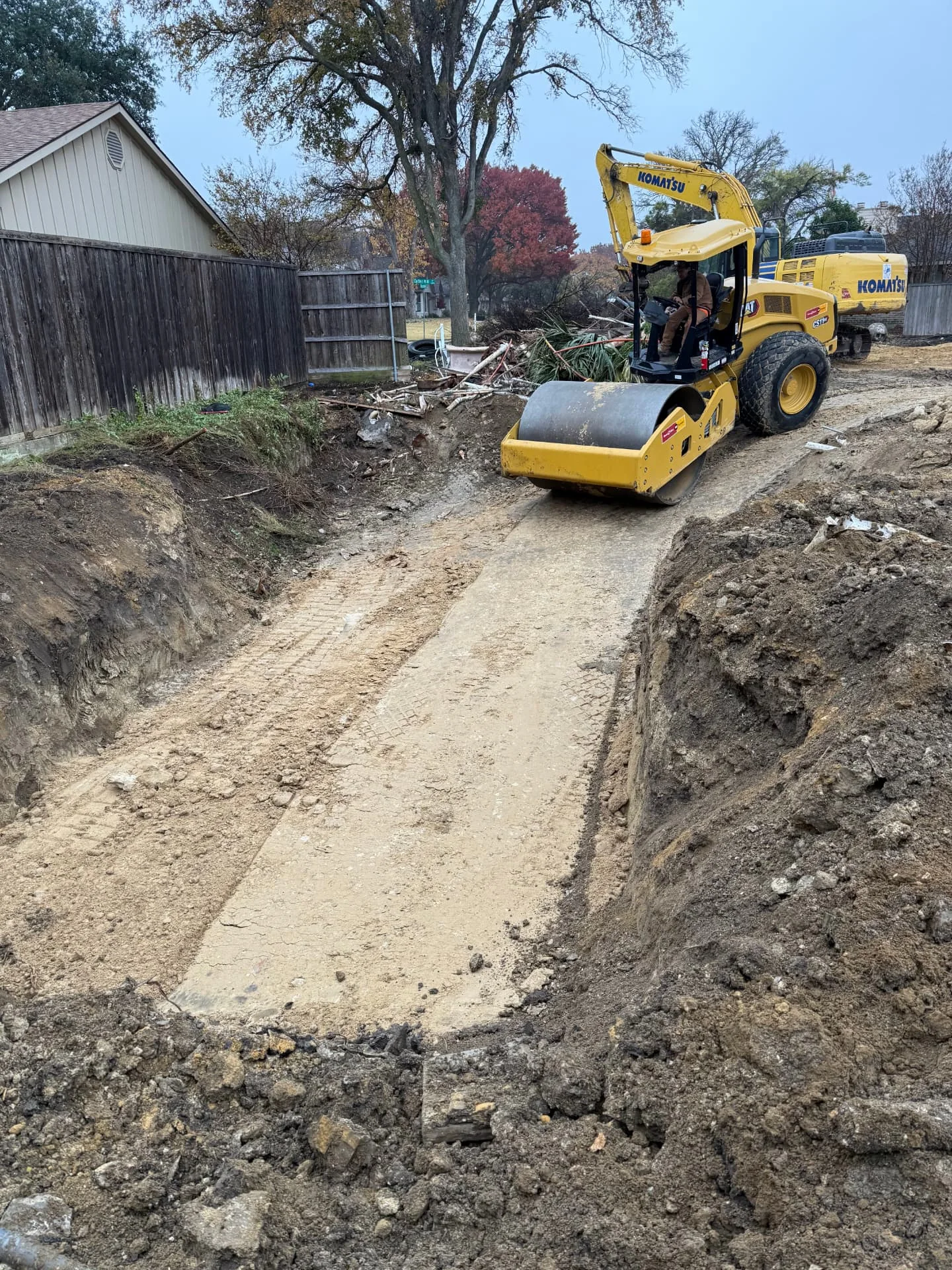
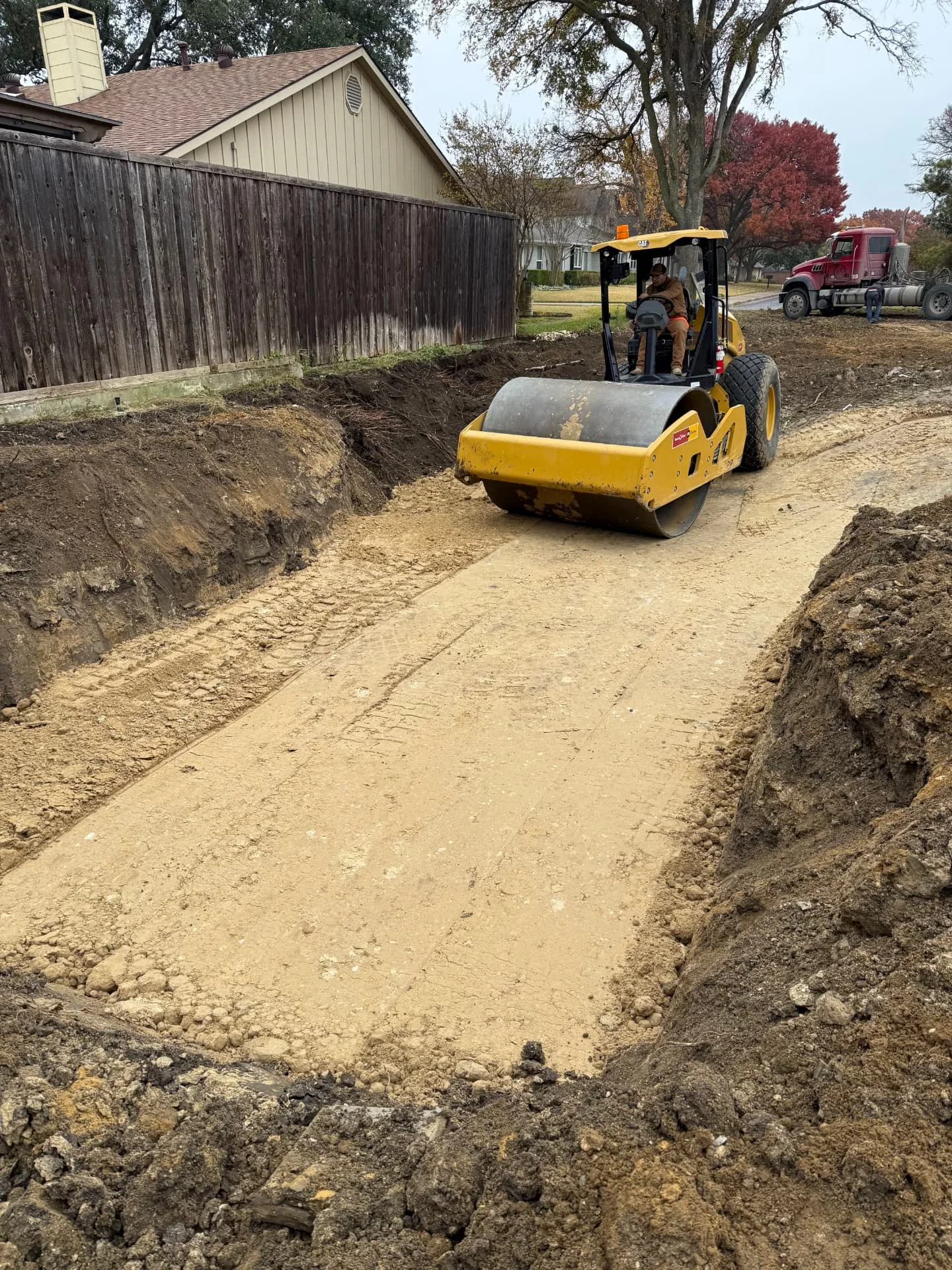
Select fill, a sand and clay mix with a small particle size that holds moisture and compacts tight, is brought in and moved into the cavity with a skid steer. It goes in layers, and a smooth drum roller compacts each layer before the next one, so there are no voids or loose pockets underneath that would settle later.
4. Final Grade
The last lift is brought up to grade and leveled with the rest of the yard, shaped so water does not collect where the pool was. With open access, a fill-in of a typical residential pool runs about a day and a half.
Demolition
Swimming Pool Demolition
Pool demolition on a residential lot in Plano or Richardson is a tight-quarters job. The pool sits in a fenced backyard with the house on one side and a neighbor on the other, and everything that comes out and everything that goes in moves through a side gate. A tracked skid steer and a small excavator do the work. The deck is broken up, the shell is broken through and knocked down, and the debris is loaded out.
A gunite or concrete pool breaks up into heavy rubble. A fiberglass or vinyl liner pool comes apart differently: the liner and the wall panels come out and the steel or polymer frame is cut up and removed. Either way the goal is the same, a cavity that cannot hold water and that is ready to take fill.
The pool equipment pad, the coping and any decking that is coming out are part of the demolition scope. What stays, like a patio or a fence line, gets protected and worked around.
Fill
Backfill and Compaction
The fill is what decides whether the yard stays flat or sinks. A pool cavity is deep, and native dirt from the yard is almost never enough material and rarely the right kind. We bring in select fill, a sand and clay mix that holds moisture and compacts tight, and it goes in layers. Each layer is rolled with a smooth drum roller before the next goes on.
Dump the whole thing in at once and pack the top, and you get voids and loose pockets underneath. Those settle over the next few years and leave a sunken spot in the yard exactly where the deep end was. Placing the fill in lifts and compacting each one is the difference between a yard and a dip.
Properly compacted fill will support a lawn, a patio, a shed or a play area. Anything with a foundation on it typically needs an engineer to sign off on the compaction first, and if that is the plan, say so before we start so the fill goes in to that standard.
Pricing
What Pool Removal Costs
Every pool is quoted after a site visit. These are the things that move the number. [CONFIRM WITH TOM: whether he wants a typical range published here. Do not add a figure until he supplies one.]
- Size and depth of the pool. Bigger and deeper means more demolition and more fill.
- Partial or full removal. Hauling off all the concrete costs more than breaking it down and leaving it below grade.
- Access. Open access for equipment is faster. A narrow side gate or a tight backyard means smaller machines and more time.
- Pool type. Gunite and concrete produce heavy rubble. Fiberglass and vinyl liner pools come apart differently.
- How much fill has to be brought in. Native dirt is rarely enough or the right material.
- Decking, coping and equipment that come out with the pool.
- Whether the fill needs to support a future structure and be compacted to an engineer's standard.
Send the address and a photo or two of the pool, and we will tell you what the site visit needs to look at. Estimates are free.
Questions
Pool Removal Questions
How much does it cost to fill in a pool in McKinney?
It depends on the size and depth of the pool, whether the concrete is hauled off or broken down in place, how much fill has to be brought in, and how easy the access is. Every pool is quoted after a site visit. Estimates are free.
How long does it take to remove a pool?
With open access, a typical residential pool fill-in runs about a day and a half after the pool is demolished. Tight access, a large pool or a full removal takes longer.
What is select fill and why do you use it?
A mix of sand and clay used for fill work in Texas. It holds moisture, has a small particle size and compacts well, which is why it goes in instead of whatever dirt happens to be on site.
Why does the fill have to be compacted in lifts?
Filling the cavity in one go and packing the top leaves voids underneath that settle later into a sunken spot. Placing the fill in layers and rolling each one prevents that.
Can I build on top of a filled-in pool?
Properly compacted fill supports a lawn, patio, shed or play area. Anything with a foundation typically needs an engineer to sign off on the compaction first, so tell us before the job starts.
Do I need a permit to remove a pool?
Many cities require a demolition permit for pool removal. Check with the city for the property, and we can tell you what we have seen in your area.
Get a Pool Removal Estimate
Send the address and a photo of the pool and the access to the backyard. We come out, look at the pool and the gate, and put the price in writing.