
Driveways and rock roads
Chip Seal Driveways in McKinney, TX
Chip seal driveway installation for McKinney, Celina, Whitesboro, Aubrey and rural North Texas. A paved finish over a base we grade and compact ourselves, without going to full asphalt.
A chip seal driveway is a compacted base sprayed with liquid asphalt and covered with a layer of rock chips rolled into it. Steele Construction LLC installs chip seal driveways and chip seal roads for rural homes, ranches and acreage in McKinney and across Collin, Grayson and Denton counties, building the base and the surface as one job. It gives the look and feel of a paved drive at a lower cost than full asphalt. Free estimates, one day response.
Tar and chip
What a Chip Seal Driveway Is
Chip seal, also called tar and chip, is the surface on thousands of miles of county roads across North Texas. A layer of liquid asphalt is sprayed over a compacted base, a layer of clean rock chips is spread into it while it is hot, and the chips are rolled down so they bond to the asphalt. The result is a hard, textured surface that sheds water, does not throw dust and does not track loose rock into the garage.
On a driveway it solves the two complaints people have about gravel. There is no dust cloud behind the truck and no loose rock spreading into the yard and the grass. It does that without the cost of a full asphalt drive, which needs a thicker base, a paving crew and a hot mix plant within reach.
It also suits a long rural drive better than asphalt does. Chip seal flexes with the ground, which matters on clay that moves with the seasons, and when it wears it gets a fresh seal coat rather than a tear-out.
The process
How We Build a Chip Seal Driveway
Three stages. The first one is where most chip seal driveways succeed or fail.
Step 1
Base Grading and Compaction
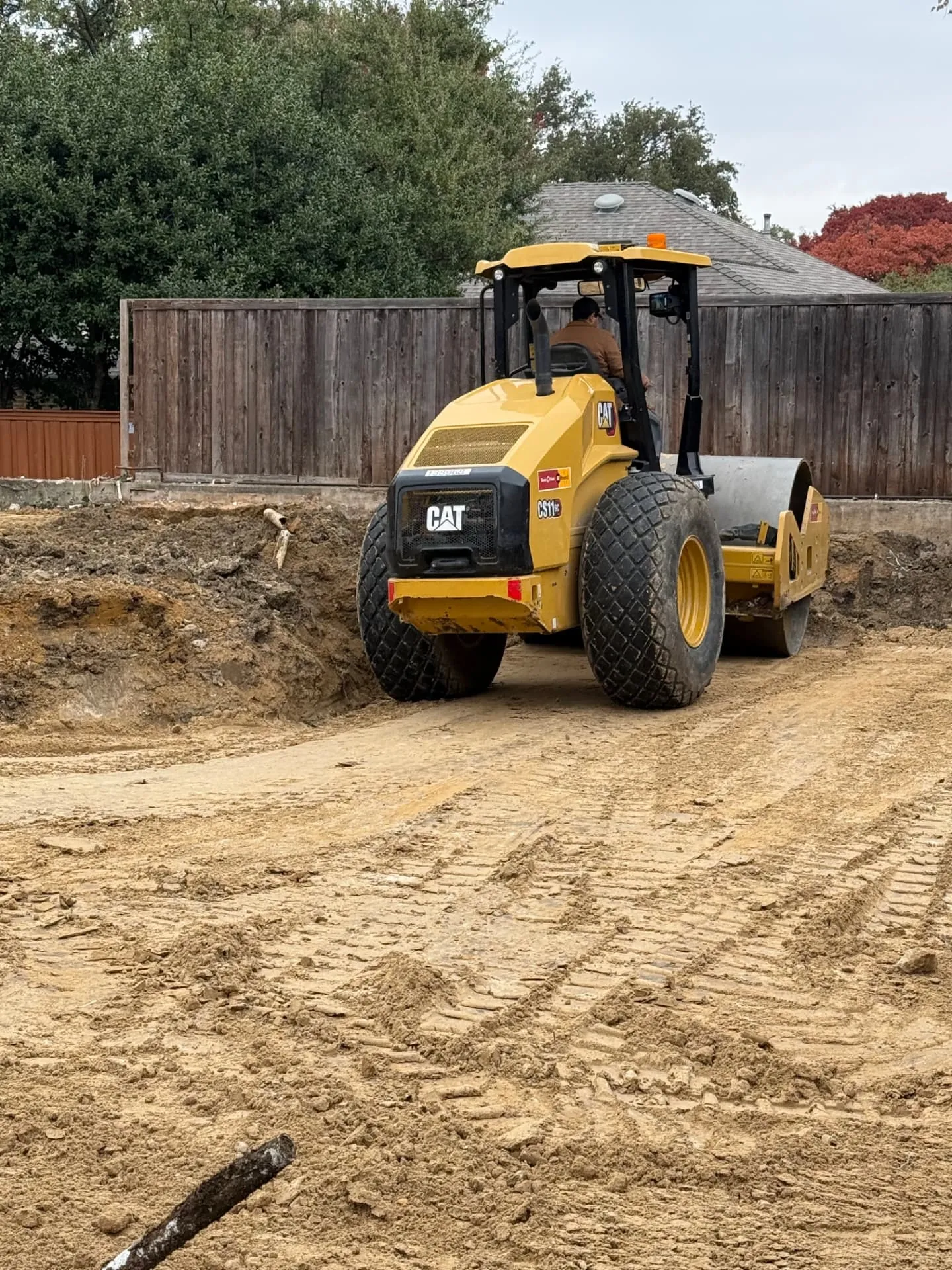
The driveway is cut to grade, crowned so water sheds to the sides, built up through low spots with fill placed in lifts, and compacted. Where the drive crosses a ditch a culvert goes in first. Chip seal is only as good as what is under it, and this stage is the dirt work we do on every driveway.
Step 2
Emulsion Application
Liquid asphalt emulsion is sprayed evenly across the compacted base at a controlled rate. Too little and the chips will not hold. Too much and the asphalt bleeds through in summer heat.
Step 3
Aggregate Spread and Rolling
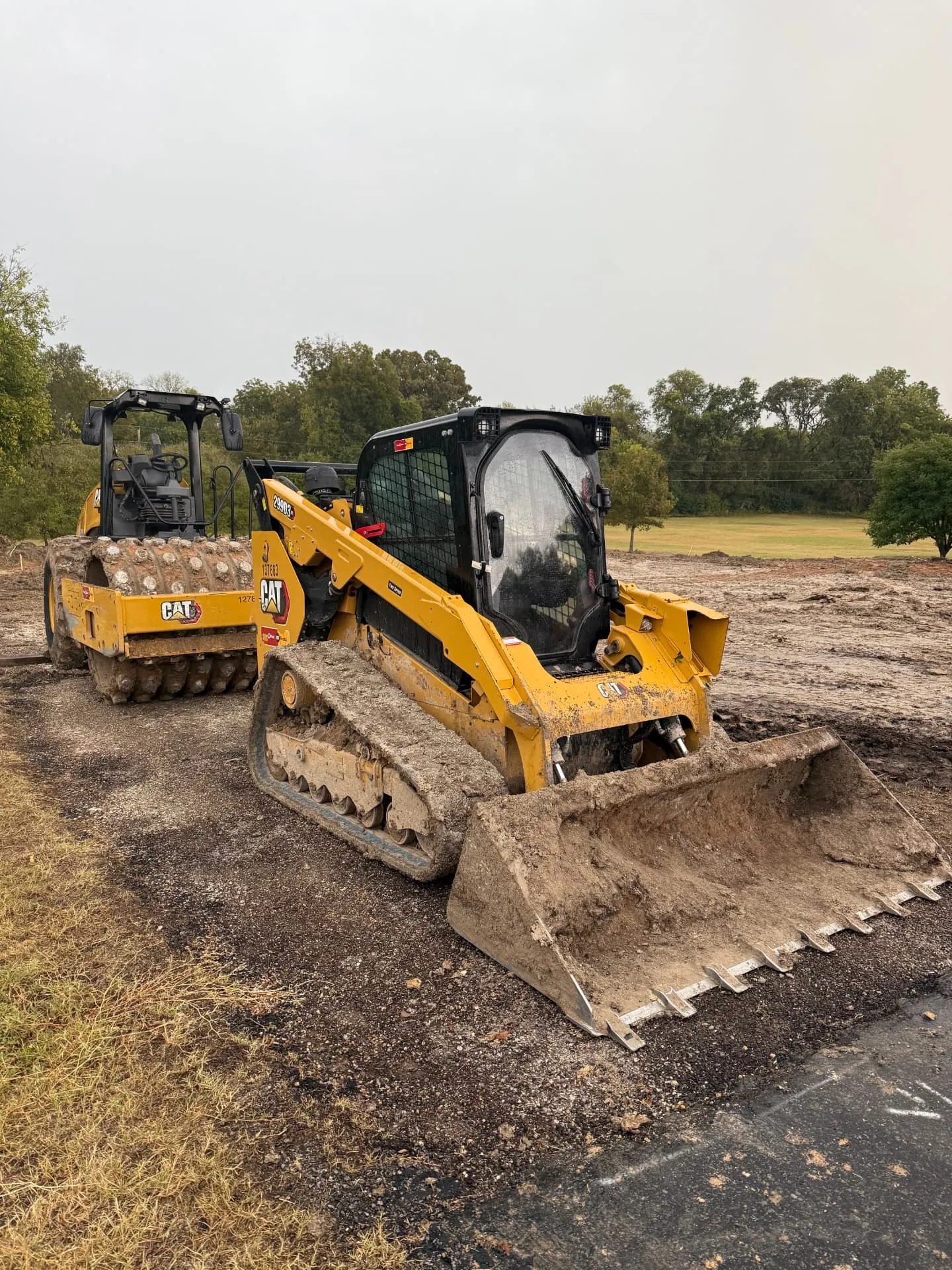
Clean rock chips are spread over the wet emulsion in a single even layer and rolled so each chip is pressed into the asphalt and locked in place. Loose chips are swept off after the surface has cured, and the drive is ready for traffic.
Roads
Chip Seal Roads for Ranches and Subdivisions
The same surface that works on a driveway works on a private road. Ranch roads between the gate and the house, roads that serve a barn and an arena, and shared roads in small rural subdivisions around Celina, Whitesboro and Aubrey all take the same treatment: a graded and compacted base with a chip seal surface over it.
A chip seal road holds up to trucks, trailers and daily traffic without the maintenance a gravel road needs, and without the cost of asphalt paving over a long run. When it wears, a new seal coat goes over the old one. On a road that has already washboarded or lost its crown, the base is regraded first, because sealing a bad base seals the problems in.
We build the road, set the culverts and grade the drainage along its length as one job, the same way we build a long driveway.
Compare
Chip Seal vs Gravel vs Asphalt Millings
Gravel is the lowest cost surface and the easiest to change later, but it throws dust, sheds loose rock and needs regrading as it wears. It is the right starting point on a new long drive where the base has not settled yet.
Asphalt millings pack down into a dark, solid surface that firms up further with heat and traffic. They cost more than gravel, less than new asphalt, and sit between the two on maintenance. A good fit for a drive that carries heavy vehicles.
Chip seal gives the paved look with the least dust and loose rock of the three, at a cost between gravel and millings. It is the answer when the complaint about the current driveway is the mess it makes, and the budget does not stretch to asphalt. All three go over the same compacted base, so a gravel drive today can become a chip seal drive later without starting over.
Questions
Chip Seal Driveway Questions
What is the difference between chip seal and tar and chip?
Same thing. Tar and chip is the older name for a surface made by spraying liquid asphalt over a base and rolling rock chips into it. Chip seal is the term road crews use.
How much does a chip seal driveway cost?
More than gravel, less than asphalt. The number depends on the length of the drive, how much base work it needs and the drainage along it. Every driveway is quoted after a site visit, and estimates are free.
Can you chip seal my existing gravel driveway?
Usually, yes, as long as the base is sound. The drive is regraded and compacted first, then sealed. Sealing over a rutted or soft base does not work.
How long does chip seal last?
It depends on traffic, drainage and the base. When the surface wears, a new seal coat goes over the old one instead of a tear-out.
Does chip seal work on clay soil?
Yes. It flexes with ground movement better than a rigid surface, which matters on the black clay across Collin County. The base still has to be built and compacted properly.
Do you do chip seal roads as well as driveways?
Yes. Ranch roads, private roads and shared roads in rural subdivisions, built on a graded base with culverts and drainage as one job.
Get a Chip Seal Estimate
Send the address and the length of the drive or road. We walk it with you, check the base and the drainage, and put the price in writing. Free estimates.